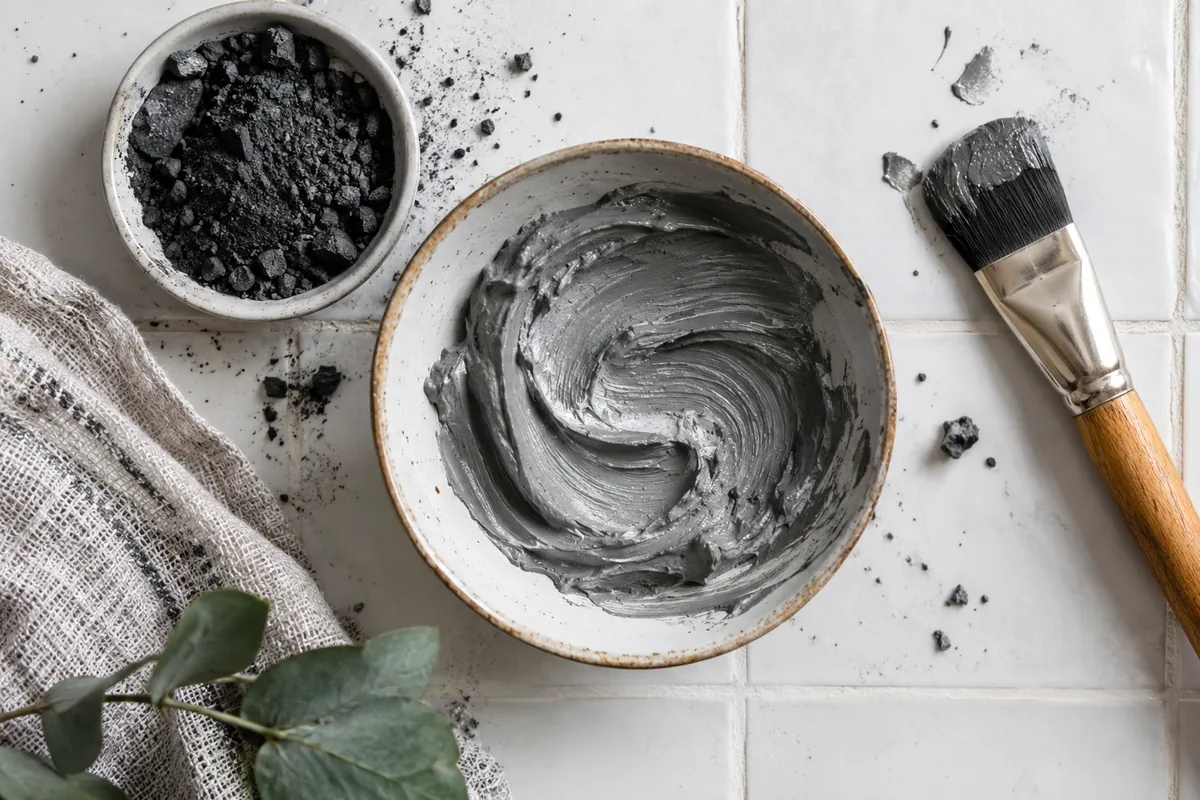
Does your skin actually "detox" through your pores?
Short answer: No. Your liver and kidneys handle detoxification — breaking down and clearing waste compounds from your body — not your skin. Sweat is mostly water and salt, not a stream of toxins. Clay and charcoal masks really do absorb surface oil, but that's oil control, not detox.
Who actually handles detox in your body
Detoxification is a real medical process — it's just not something a face mask does. Your liver breaks down drugs, alcohol, and other compounds into forms your body can clear, alongside its other jobs in metabolism, immunity, and digestion [1]. Your kidneys then filter those breakdown products out through urine, continuously, whether or not you've bought a "detoxifying" product.
The diet and supplement version of this myth fares no better: a 2015 review of commercial detox diets — the juice-cleanse, tea, and supplement kind — found very little clinical evidence behind them, and no controlled human trials had even tested whether they work [2]. Same unproven claim, sold as a tea or a mask.
What sweat is actually for
Sweat glands regulate body temperature — they're not a waste-disposal channel. A 2020 review describes sweat as mostly salt water: dissolved sodium and chloride, with smaller amounts of potassium, urea, and lactate [3]. Even alcohol, which diffuses into sweat easily, makes the point — sweat, breath, and urine combined account for only 2–10% of what leaves your body, while your liver clears the rest [3]. If even that gets handled almost entirely internally, sweat was never a meaningful toxin exit route.
Sweat still matters to your skin, just not that way: left on your face, it mixes with oil and bacteria and can clog pores, part of why a plain cleanse after a workout helps keep pores clear [8] — a mechanical clogging problem, not evidence your skin purged anything.
What clay masks and charcoal actually do
Clay can absorb surface oil, but the evidence here is one uncontrolled branded multi-ingredient mask study, not proof of a general detox effect. In that 2023 study, a kaolin-and-bentonite mask used twice weekly for four weeks by adults with oily or combination skin reduced measured oiliness after application [4]. That is surface adsorption, not toxin removal, and it does not establish the same result for other clays, charcoal, or masks. Charcoal is marketed similarly with less behind it: a dermatology review found no clinical evidence it treats acne or dandruff, and no proof of exfoliating or anti-aging effects, though it called the ingredient generally safe [5].
The furthest version of this myth is the detox foot pad, sold on the idea that a patch on your sole pulls toxins out overnight, turning dark as "proof." The FTC investigated Kinoki Foot Pads for claiming they would "remove toxins from the body" and found the advertising either false or unsupported by evidence [6]. A federal judge later banned the marketers from selling "any dietary supplement, food, drug, or medical device" at all [7].
The honest version: what cleansing can do
Strip away the "detox" language and cleansing is still worth doing — just more modest than the marketing suggests. It lifts off dirt, oil, makeup, and sweat sitting on your skin's surface, and doesn't need to reach your bloodstream or liver to do its job. Removing what's actually on your skin is complete on its own.
The rest of a good routine works the same honest way, through specific mechanisms rather than vague "purging." A humectant like glycerin draws water into your skin's outer layer to keep it hydrated — a defined job, not a mystery detox process. If a product's "detoxifying" claim doesn't match what's actually in the bottle, scan the label and check for yourself.
FAQ
Does sweating detox your body?
Not in any meaningful way. Sweat is mostly salt water released to cool you down, and even alcohol still clears mostly through the liver — sweat, breath, and urine combined account for only 2–10% [3]. Wash off heavy sweat promptly to prevent clogged pores, not because you're sweating out toxins [8].
Do clay masks or charcoal pull toxins out of your skin?
No — the cited clay study measured one branded, multi-ingredient mask and cannot establish a general result for all clay masks [4]. Any surface-oil reduction is adsorption, not toxin removal. Charcoal has even less clinical support for treating acne, dandruff, or aging [5].
Why do skincare brands keep using the word "detox" if it isn't real?
Because it sells, and "toxins" is vague enough to be hard to test. When one company made the claim specific — that a foot pad removes toxins from the body — regulators found it false or unsupported, and a judge banned the marketers from selling health products entirely [6][7]. Most "detox" skincare copy never faces that test; it just borrows the word's credibility.