Does Slugging With an Occlusive Like Petroleum Jelly Actually Do Anything?
Short answer: yes, for water loss. An occlusive like petrolatum can cut water loss through the skin by close to 99 percent, which genuinely helps very dry or barrier-compromised skin. But it doesn't add hydration on its own, and it can backfire if you're acne-prone, fungal-acne-prone, or slugging over active treatments.
What slugging actually is
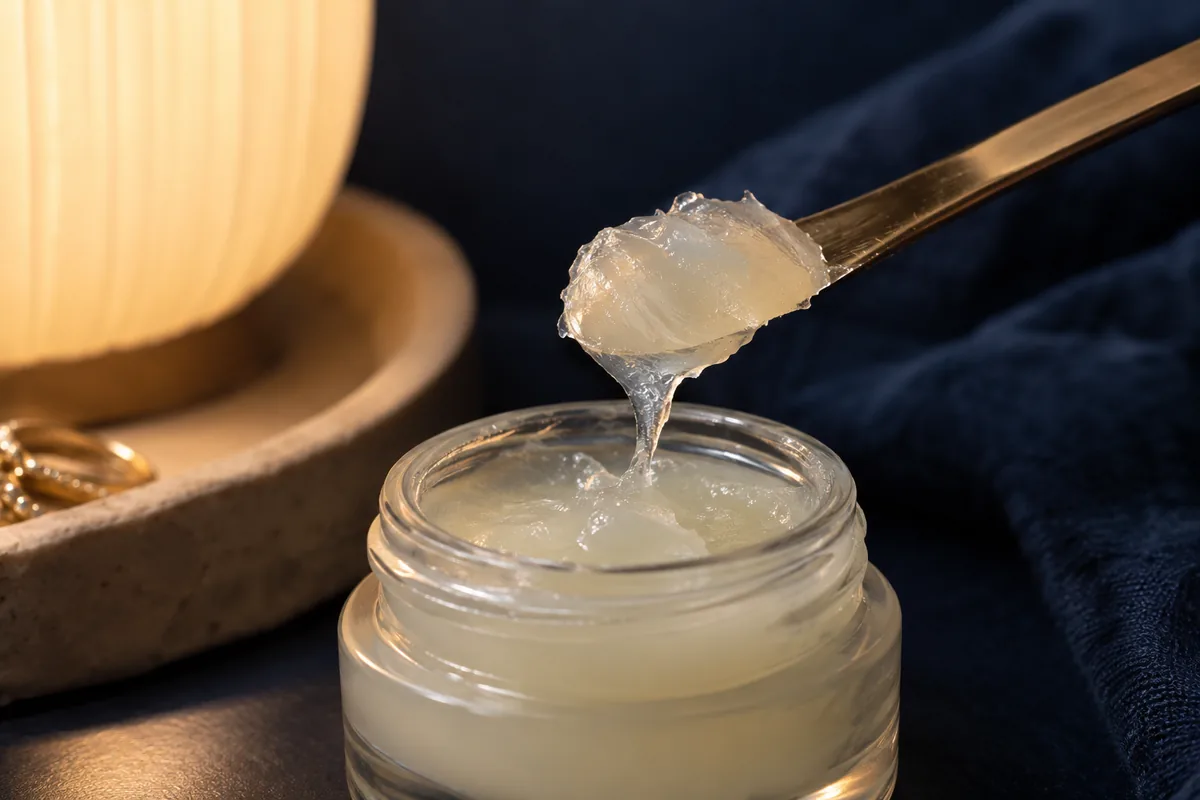
"Slugging" is internet shorthand for finishing a night routine with a thin-to-thick layer of a pure occlusive — petroleum jelly is the standard, though thick balms and ointments work the same way. Occlusives sit on top of skin as a hydrophobic film and physically block evaporation. That's different from what a humectant like glycerin does: glycerin pulls water into skin, while an occlusive on top keeps that water from escaping [2]. Most moisturizers already blend the two; slugging is just an intentional, overnight-strength version of that same layering, with petrolatum as the seal.
Because petrolatum forms such an effective barrier, it reduces TEWL by roughly 99 percent in measured use — meaningfully more than lighter oils — letting deeper skin layers replenish surface water rather than losing it to the air overnight [1].
The evidence for barrier support
The reason dermatologists reach for petrolatum on genuinely dry or damaged skin isn't just that it feels sealing — there's a specific mechanism behind it. Researchers occluded skin with petrolatum in both healthy volunteers and people with atopic dermatitis and measured molecular-level changes: significant increases in antimicrobial peptides and immune activity, more filaggrin and loricrin (two proteins skin needs to build its barrier), a thicker stratum corneum, and fewer inflammatory cells in non-lesional eczema skin [3]. The evidence is strongest for skin that's already dry, cracked, healing, or eczema-prone — not for skin that's already functioning normally.
Who should skip slugging
Occlusion is a blunt tool: it seals in everything under it, including sebum, sweat, dead skin cells, and the yeast that lives on everyone's skin. Clinical guidance is direct that occlusive moisturizers can cause or worsen acne, perioral dermatitis, and folliculitis [2], and the American Academy of Dermatology's own consumer advice is just as blunt: skip petroleum jelly on your face if you're acne-prone, since it can trigger breakouts in some people [6]. That risk is especially relevant for fungal acne (Malassezia folliculitis), a yeast overgrowth of the hair follicle that develops in part from a blocked follicle — clinical reviews describe it as occurring "secondary to occlusion," with occlusive clothing, makeup, and lotions promoting flares, and hot, humid, sweaty conditions making it worse [5]. If your breakouts look like uniform, itchy small bumps rather than classic acne, it's worth running your situation through our fungal acne checker before adding a nightly seal on top — slugging can make that specific condition harder to clear, not easier.
What not to slug over
Occlusion doesn't just trap what's already on your skin — it changes how much of it gets absorbed. Dermatology research on occlusion has long noted it's used medically to push drugs deeper into skin, and that same effect increases penetration of other chemicals and can worsen irritant and allergic reactions [4]. Applied to a routine, sealing petrolatum over retinoids, exfoliating acids, or benzoyl peroxide can drive more of that active into your skin than the product alone would — reading as "it works better" for some people and as harsher, more irritated skin for others. If you want the barrier benefit on an actives night, the safer sequence is a plain moisturizer underneath rather than sealing the actives themselves. You can run a product's label through our scanner if you're unsure whether it's an active you shouldn't layer an occlusive over.
FAQ
Is slugging just Vaseline, or does the specific product matter?
Petroleum jelly is the most-studied and most-used occlusive for slugging — it's the same ingredient behind both the water-loss numbers and the barrier-repair research above [1][3]. Thicker balms and ointments with similar occlusive ingredients (like paraffin or mineral oil) work by the same basic mechanism, but petrolatum specifically is what this evidence is based on.
Can slugging cause breakouts even on skin that isn't normally acne-prone?
It's possible, mainly with frequent use or when layered over pore-clogging products, since occlusion can trap oil and dead skin against the follicle [2]. It's not guaranteed — plenty of people with normal or dry skin slug without issue — but if you notice new bumps after starting, that's a sign to stop or space it out rather than push through.
Do I still need a regular moisturizer if I'm going to slug?
Yes. An occlusive seals in water that's already in your skin; it doesn't supply water itself. Moisturizers typically combine a humectant with an occlusive because that combination works better than either alone [1] — pairing a hydrating layer (something with glycerin or a similar humectant) underneath your occlusive step follows that same logic.