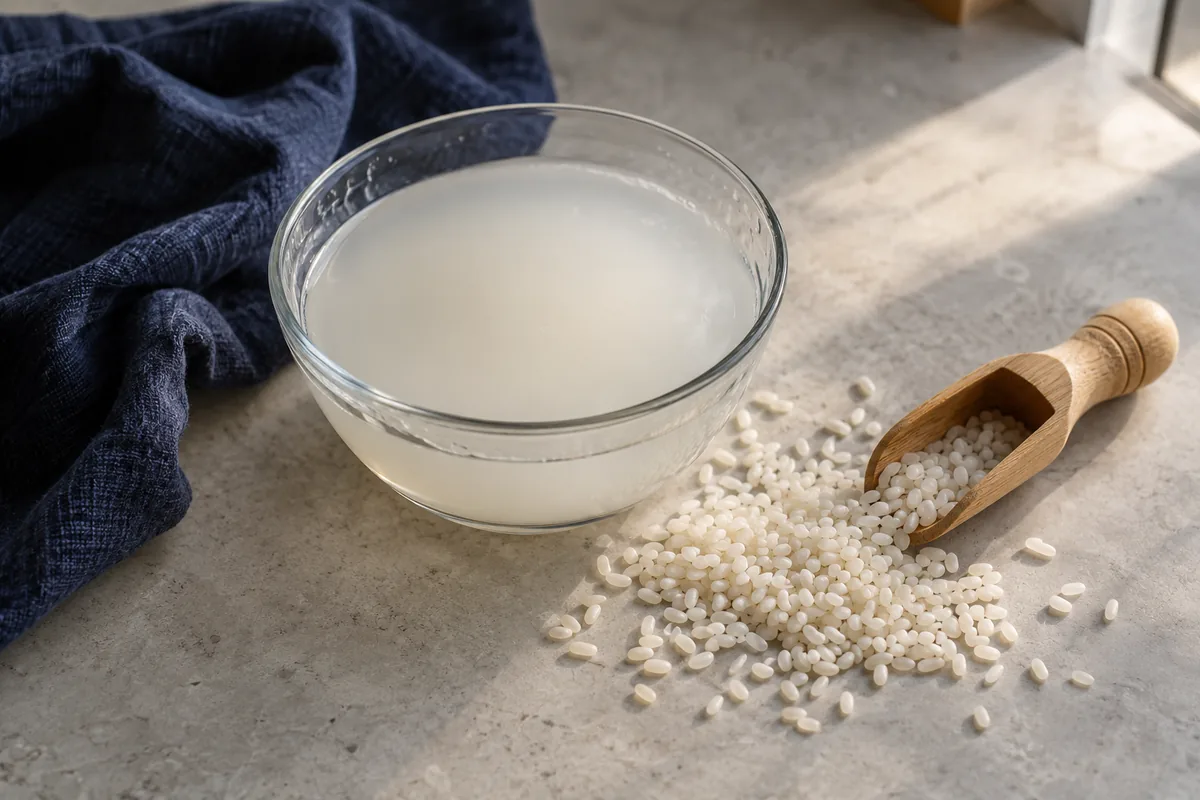
Does rice water actually do anything for skin, or is this a TikTok trend riding real heritage?
Short answer: the folk practice is real — East Asian rice-washing traditions go back centuries, and today's K-beauty rice-water toners and essences are a genuine commercial and cultural category, not an invented trend. But the clinical evidence behind "rice water brightens and firms skin" is thin and old: a handful of small studies from 2002 to 2018, at least one of them the actual first attempt to test rice water itself (whose own authors opened their paper by stating no scientific evidence existed), plus a widely repeated statistic that doesn't trace back to any source we could actually read. More recent lab work on fermented rice water, rice-derived ceramides, and fermented rice bran extract adds mechanistic detail — but it's cell-line, tissue-model, and mouse evidence, not new proof that a jar of rinse water changes your skin. Treat the trend as heritage-plus-hype layered on a small, growing pile of modest, unglamorous lab findings — not as settled science.
Where does the rice water tradition actually come from?
The tradition is genuine folk practice across East and Southeast Asia — using the starchy water left over from washing or boiling rice as a skin and hair rinse — with centuries of continuous use, most visibly documented around hair care rather than facial skincare specifically. It is not a marketing invention.
Rice-washing water as a beauty ingredient shows up across multiple rice-growing cultures, and the version most often cited today is hair-focused: villages in southern China's Guangxi region, including the Yao community of Huangluo, are documented (and Guinness-recognized) for extremely long hair maintained partly with fermented rice-rinse water passed down through generations. That's a real, living practice — but it's about hair length, not facial skin, and no controlled study has isolated rice water as the cause of it (diet, genetics, and hair-care habits all differ too much between a small village and a general population to draw that line). The facial-skincare version of the story is culturally real too — modern K-beauty brands built entire product lines on "rice water" as a positioning, and one Korean brand's rice-water cleansing-oil collection alone has reportedly sold in the tens of millions of units worldwide. That commercial success is a fact about marketing and heritage appeal, not a fact about efficacy — and worth noting plainly: several of those "rice water" K-beauty products list niacinamide and other actives alongside rice extract, so a shopper crediting results to "rice water" specifically may be crediting the wrong ingredient. See our niacinamide evidence review for what that better-studied ingredient actually does.
Has rice water itself ever been tested on skin?
Yes, but only once as its own formulated product, in a small 2018 academic study — and that paper's authors explicitly wrote that no scientific evidence existed for rice water in skincare before their own work.
The most direct test of "rice water, the actual liquid" on skin is a 2018 study out of the University of Lisbon's Faculty of Pharmacy, published in the open-access journal Cosmetics [1]. The researchers' own framing is worth quoting because it undercuts the marketing directly: they opened by stating that although rice's skin-healing reputation is old, "no scientific evidence supports [rice water's] role in skincare products." They then set out to test some.
What they actually did: rice water was tested in a test tube (in-vitro) for general antioxidant activity and for its ability to block elastase, an enzyme that breaks down the elastin fibers that keep skin springy — rice water showed both effects in that dish-based assay. They then formulated a gel that was 96% rice water and put it on 12 human volunteers for 28 days. It's important to be precise about what that human portion tested: the primary human study was a Human Repeat Insult Patch Test, the standard method for checking whether a product irritates or sensitizes skin — a safety test, not an efficacy trial. The gel passed it (no irritation, "biocompatible with human skin"), which tells you it's safe to put on your face, not that it visibly changed anything. Twelve people over four weeks, with the human arm of the study built around safety rather than measured outcomes, is a genuinely small and early-stage result — a reasonable first step, not proof of an anti-aging effect.
Does fermented rice water work any differently from plain rinse water?
Some East Asian rice-water traditions — and most modern "fermented rice water" cosmetic products — use rice water that's been left to ferment for hours or days, not the plain water poured off after a quick rinse. That's a chemically different liquid, and a 2020 cell-culture study gives a specific, if narrow, mechanism for why fermentation might matter for skin-brightening claims specifically.
Researchers at Chulalongkorn University in Bangkok fermented an unpolished black rice variety with a defined starter culture of yeasts, mold, and bacteria (Rhizopus oryzae, Saccharomycopsis fibuligera, Saccharomyces cerevisiae, and Pediococcus pentosaceus) to produce what they called "fermented unpolished black rice sap" — functionally, a fermented version of rice-soaking water [5]. Applied to B16F10 mouse melanoma cells (the standard lab cell line used to study melanin production, not human skin cells and not living skin), the fermented rice sap reduced melanin content and cut measured tyrosinase enzyme activity to about a quarter of the untreated level at its highest tested concentration, along with reducing expression of several genes that drive pigment production [5]. This is university-funded academic research with no declared industry conflicts, and it's a genuinely closer analog to "rice water" as traditionally prepared than most of the isolated-extract studies in this space — but it's still a mouse cancer cell line in a dish, two steps removed from a controlled test on human skin, let alone a finished product. It supports a plausible mechanism for why fermented rice water carries more of a folk reputation for brightening than a quick modern-day rinse might, without proving the fermented version does anything visible on a face.
What about the "12% fewer wrinkles" number everyone quotes?
That figure — usually rendered as roughly 12% fewer wrinkles, 17% more elasticity, and 19% more moisture from a rice-derived inositol lotion — circulates on nearly every rice-water article online, and we could not verify it against a source we could actually read. Treat it as unconfirmed and don't repeat the precise numbers.
This is the folklore-checking exercise worth doing out loud. A specific triad of numbers — around 12% wrinkle improvement, 17% elasticity gain, 19% moisture increase, attributed to a "2001 study" on inositol (a compound found in rice) applied as a 1–2% lotion over seven weeks — appears, worded almost identically, across dozens of skincare blogs and at least one health-media outlet. When we tried to trace it to an actual peer-reviewed paper — a named journal, named authors, an accessible abstract or full text — we couldn't find one. What exists instead is a chain of blog posts citing each other, with the ultimate source landing on an unlabeled research-database entry with no visible authors, journal, or methods section we could independently confirm. That's exactly the shape of a fabricated-or-misattached statistic the folklore rule exists to catch: widely repeated, precisely specific, and untraceable. The honest version of this section isn't "these are the real numbers" — it's "this number is everywhere and nobody citing it seems to have actually read where it came from." We're not repeating it.
Is there any real evidence for rice's antioxidant or UV-protective effects?
Some — but it comes from lab-dish and cultured-tissue experiments, not from rice water applied to living human skin, and it's about rice bran extract specifically, a more concentrated, processed ingredient than the starchy water left over from rinsing rice.
Separately from whole rice water, a 2010 study out of a Spanish university lab tested a water-soluble enzymatic extract of rice bran — not rice water itself — for its ability to blunt UVB-induced oxidative damage [2]. The testing was done on two lab models: individual human skin cells (keratinocytes) grown in a dish, and a reconstructed human epidermis — lab-grown tissue built to mimic skin structure, not a biopsy from a living person and not a whole intact organ. In that tissue model, the extract measurably reduced UV-triggered lipid damage, in a range the researchers compared to vitamin E at a much higher concentration. Worth flagging plainly: one of the paper's co-authors is affiliated with PEVESA (now Pevesa Biotech), a Sevilla-based company that commercially manufactures enzymatic rice-bran extracts for food and life-science applications — the same category of ingredient this study tested. We couldn't confirm whether that affiliation is listed on this specific paper's byline or on a different paper from the same research group, so we're not calling this a settled conflict of interest — but it's close enough to the commercial product line to flag rather than treat the finding as fully disinterested academic research. That's a real, useful data point about rice bran's antioxidant chemistry — but it's ex-vivo tissue-culture evidence, two steps removed from "put rice water on your face and it protects you from the sun," and it was never tested as sun protection in a living person. Separately, a small mouse study published in 2018 found that rice bran supplementation, taken orally, suppressed UVB-induced wrinkle formation and enzyme activity linked to collagen breakdown in the animals' skin — real, but animal data, about oral supplementation, not a topical human result [3].
Is there evidence for rice-derived compounds and the skin barrier, beyond rice starch?
Yes, from a different angle than the classic rice-starch bath study below: a 2022 tissue-model study on ceramides isolated from rice bran oil manufacturing byproducts, run and largely funded by the company that sells them commercially.
A 2022 study published in International Journal of Molecular Sciences isolated thirteen glucosylceramides and six ceramides from the gummy leftovers of rice bran oil production, then tested them on a reconstructed human epidermis model (lab-grown skin-equivalent tissue in a dish, not a live volunteer's skin) [6]. Certain long-chain glucosylceramide variants measurably reduced transepidermal water loss — the same barrier-function measurement used in the rice-starch study below — after seven days of topical application to the tissue model [6]. This needs a direct conflict-of-interest flag, not a footnote: four of the paper's six authors are employees of Oryza Oil and Fat Chemical Co., Ltd., the Japanese company that manufactures and sells these rice-derived ceramide ingredients (the other two are academic researchers at Kindai University's Pharmaceutical Research and Technology Institute), and the company co-funded the work alongside a public research subsidy [6]. That doesn't make the chemistry wrong, but it means this is largely industry research on an industry's own product, tested only in a tissue model — not independent, and not yet run on real human skin. It's a useful data point that rice-derived lipids can plausibly support barrier function through a different mechanism (reinforcing the skin's own ceramide layer) than the starch-and-water-loss mechanism in the 2002 study below, but it should be read as an industry-linked, preliminary case for its ingredient, not independent confirmation.
Does fermented rice bran extract support collagen or anti-aging claims?
A 2025 study found a fermented rice bran extract increased collagen and elastin production in mouse skin cells and in live mice — genuinely more mechanistic detail than most of the studies here, but still animal and cell-culture evidence, not a human trial, and one author is tied to the company that supplied the rice bran material.
Researchers at Nanjing University of Chinese Medicine, working with collaborators including a University of Technology Sydney co-author, fermented a rice bran extract with Aspergillus oryzae (the same mold used to ferment soy for miso and koji) and tested it across several models: mouse skin fibroblasts grown flat in a dish, the same fibroblasts grown as 3D spheroids, a 3D reconstructed skin model, and the dorsal skin of live Balb/c mice treated topically for two or four weeks [7]. Across those models, the extract drove roughly six-to-twelvefold increases in Type I and Type III collagen gene expression, about a doubling of visible elastin fibers in mouse skin after 28 days, and measurable improvements in the mice's skin tensile strength, hydration, and elasticity [7]. That's a more complete picture — cell, tissue, and live-animal data pointing the same direction — than most single-method studies in this space, but the operative word is still mouse: nothing here was tested on human skin, in a supplement or topically, and mouse dermal biology doesn't always translate to human results. One listed author works for Synertechcare Australia Pty Ltd, a company that supplied the rice bran raw material used in the study, which the paper discloses as a conflict of interest; the remaining authors reported none, and the study states it received no financial support [7]. That's a narrower, more specific commercial tie than a full industry-funded study, but worth naming since it involves the exact raw material tested.
What's the actual evidence for rice water and skin barrier repair?
The best-supported claim in this space isn't about brightening or wrinkles — it's a 2002 academic study finding that rice starch added to bath water sped healing of skin barrier damage caused by a harsh surfactant, in healthy adult volunteers.
A 2002 paper from a Belgian university dermatology-research group is the oldest and most rigorously reported study in this whole topic, and it tested something narrower and more useful than "anti-aging": whether rice starch helps skin recover after irritation [4]. Researchers deliberately damaged forearm skin with sodium lauryl sulfate (a harsh detergent used specifically to standardize irritation in lab studies, not something typically found in leave-on skincare at that concentration), then measured recovery — using transepidermal water loss, a validated instrument-based measure of how much water is escaping through a compromised skin barrier — with and without rice-starch bath water applied twice daily for 15 minutes. The rice-starch group's damaged skin recovered its barrier function about 20% faster than the comparison. That's a specific, source-verified number, from a real academic dermatology lab, using an objective instrument rather than a self-reported survey — genuinely one of the more solid data points in this article, and it remains the only study in this topic actually run on human skin measuring an outcome rather than just safety. It's still one study, on deliberately irritated healthy forearm skin, using rice starch dissolved in bath water rather than facial "rice water" as sold in a K-beauty toner, and it hasn't been meaningfully repeated or extended since — the newer ceramide tissue-model work above [6] points at a second, complementary barrier mechanism, but hasn't been tested on human skin the way this 2002 study was. For general barrier-support framing beyond this one narrow finding, see our barrier repair guide.
So is rice water worth using?
As a gentle, low-risk step in a routine — plausible, and the one solid human-relevant data point (the 2002 barrier study) supports a real, if narrow, mechanism. As a proven brightening or anti-aging active with numbers behind it — no, not yet. That's a heritage-and-marketing claim riding on studies that are either decades old, animal, in-vitro, cell-culture, tissue-model, or unverifiable — and the newest additions to that pile (fermented rice sap, rice-derived ceramides, fermented rice bran extract) sharpen the plausible mechanisms without adding a second human trial.
None of this makes rice water a bad thing to try — it's a mild, low-cost, low-irritation-risk ingredient, and the one study that tested it directly on human skin found no safety problems. What it doesn't have is a modern, well-powered, human clinical trial measuring wrinkles, brightness, or elasticity from rice water itself, applied the way people actually use it. The trend's real strength is cultural: a genuinely old East Asian practice, repackaged into a genuinely large modern K-beauty product category. Its scientific backing is a scattered handful of small, dated, lab-only, or industry-linked studies — plus at least one number that doesn't check out. If you're shopping K-beauty rice products and want to know what's actually driving results in a given formula, run the ingredient list through our product checker before crediting the rice.
FAQ
Is rice water backed by science, or is it just a TikTok trend?
Both, in different senses. The cultural practice is old and real. The clinical science specific to rice water is recent, small, and thin — one 2018 human study (mostly a safety patch test, not an efficacy trial) [1], one solid but narrow 2002 barrier-repair study using rice starch rather than rice water as typically sold [4], and otherwise animal, in-vitro, or tissue-model data about rice bran extract, fermented rice sap, or isolated rice-derived compounds — different, more processed ingredients than plain rice water [2][3][5][6][7].
What's the most solid rice-related skin study that exists?
The 2002 Belgian study on rice starch as a bath additive for sodium-lauryl-sulfate-damaged skin, which found about a 20% improvement in barrier recovery measured by transepidermal water loss [4]. It's still one study on deliberately irritated forearm skin, not facial rice-water toner, and it remains the only study here run on living human skin measuring an actual outcome.
Does the "12% wrinkle reduction" stat for rice/inositol actually hold up?
We couldn't verify it. That specific figure is repeated across many skincare articles but traces back to no journal, authors, or methodology we could independently confirm — treat it as unconfirmed marketing folklore rather than a real result.
Is rice bran extract the same thing as rice water?
No. Rice water is the diluted starchy liquid left from rinsing or boiling rice. Rice bran extract is a more concentrated, processed ingredient derived from the outer layer of the rice grain, and it's what most of the antioxidant, ceramide, and collagen-related lab studies actually tested — not whole rice water [2][3][6][7].
Does fermenting rice water make it more effective?
There's an early, plausible mechanism for that idea — a 2020 cell-culture study found fermented black rice sap reduced pigment-producing enzyme activity in mouse melanoma cells [5] — but it hasn't been tested on human skin, and it doesn't tell you whether the kind of home-fermented rice water some traditions use, or a store-bought "fermented rice water" toner, behaves the same way as the specific fermentation process the study used.