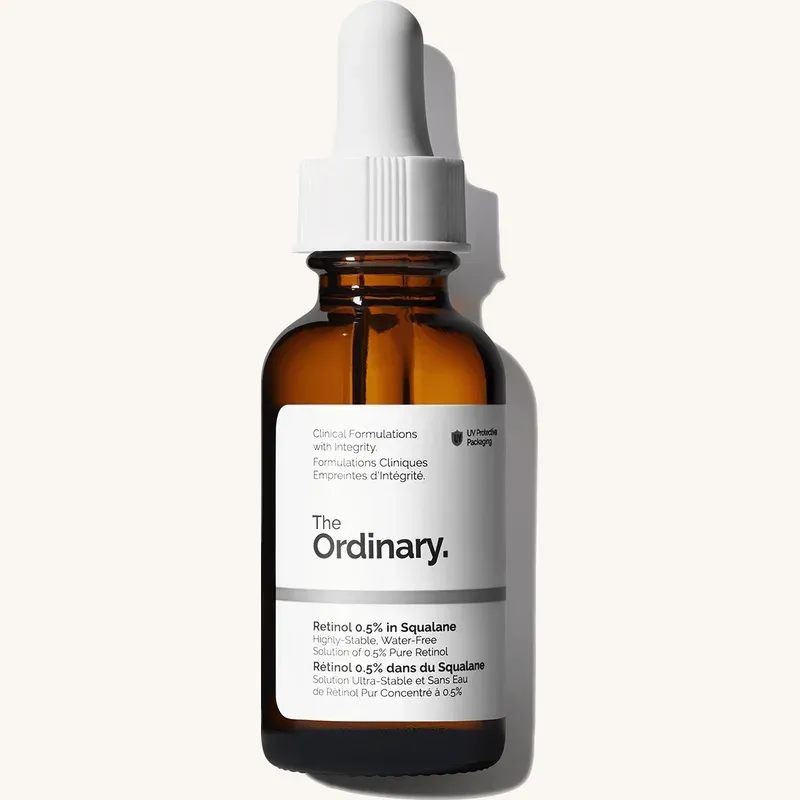
Do peptides in skincare actually work?
Short answer: Some do, modestly. Small trials — several run by the company that sells the ingredient — show real but limited improvements in fine lines and firmness, nowhere near what retinoids or daily sunscreen deliver.
The four kinds of peptides you'll see on a label
"Peptide" on an ingredient list could mean four different things, grouped by what they're designed to do [1]:
- Signal peptides mimic broken-down fragments of collagen, telling skin cells to make more. Palmitoyl pentapeptide-4, sold as Matrixyl, is the best-known example.
- Carrier peptides ferry trace minerals like copper into cells to support wound healing and enzyme activity — copper peptide (GHK-Cu) is the standard example.
- Neurotransmitter-inhibitor peptides aim to blunt the tiny muscle contractions that form expression lines, the way injectable botulinum toxin does, but topically and far more weakly. Acetyl hexapeptide-8 (Argireline) is the famous one.
- Enzyme-inhibitor peptides block enzymes like collagenase that break down existing collagen; soybean-derived peptides are a common example.
Each has a plausible mechanism on paper — not proof it does anything you'd notice.
What the clinical evidence actually shows
Zoom into the famous individual ingredients and the picture stays modest. Matrixyl's foundational study randomized 93 women to a moisturizer with or without a low dose of the peptide for 12 weeks and found a real, placebo-controlled improvement in wrinkles — but the trial was designed, run, and authored entirely by scientists at Procter & Gamble, the company that markets products built around the ingredient [3]. Argireline's most-cited trial randomized 60 people, 3-to-1 in favor of the peptide, and reported 48.9% "anti-wrinkle efficacy" after four weeks of twice-daily use around the eyes, versus 0% for placebo [6]. A GHK-Cu (copper peptide) facial cream reduced visible photoaging signs after 12 weeks of use in 71 women [4].
These are legitimate, placebo-controlled results — but small, single trials, and some of the most-quoted ones were run by the company that sells the ingredient. That's how cosmetic science usually gets funded, but a "clinical studies show X%" claim on a bottle deserves the same scrutiny as any other manufacturer number.
Can peptides even get into skin?
Here's what the marketing usually skips: peptides are relatively large, water-loving molecules, and skin's outer layer is built from oily lipids that resist them [7]. Measured directly, just 0.22% of an applied Argireline-type peptide crossed that outer layer in one skin-penetration study, with none detected in deeper tissue [5] — and the same review found no study has confirmed Argireline's muscle-relaxing effect on real skin, as opposed to in a test tube [5]. Formulators try to work around this with tricks like attaching fatty acids or building nanoemulsions [7], though whether that meaningfully helps — versus just changing how a cream feels going on — is a formulation-by-formulation question the label alone can't answer.
Setting realistic expectations
None of this makes peptides a scam. Treat a peptide serum as a product-specific option, not a replacement for established routine basics. Daily sunscreen and prescription retinoids have their own evidence bases [8][9]; peptides have not been tested head-to-head against either in the cited evidence, so comparative ranking remains uncertain.
In practice: treat a peptide serum as a nice-if-it-helps layer. Many are formulated alongside hyaluronic acid for immediate plumping — that dewier look right after applying is the humectant doing its job, not proof the peptide rebuilt collagen. To see what's actually in a "peptide complex" versus mostly fragrance and filler, run the list through our scanner.
FAQ
Are peptide serums worth buying?
If your routine already covers sunscreen and, if you tolerate it, a retinoid, a peptide serum may be a reasonable add-on — the trials that exist are small and product-specific [2]. Do not treat it as a substitute or expect a fast, dramatic change.
Do peptides work faster than retinoids?
There's no head-to-head trial comparing them directly. The peptide studies that exist ran 4 to 12 weeks with modest results [2], while retinoid evidence spans decades of larger trials with a more established effect [8]. If anything, the shorter, smaller peptide trials make it harder to know how results hold up over a year of everyday use.
Why do some peptide products seem to work right away?
Most likely because they're formulated with humectants like hyaluronic acid, which plump skin with water within minutes, or silicones that smooth the surface optically. That instant effect is real, but it's a different mechanism from the slower, cell-signaling process peptides are supposed to trigger over weeks [1] — quick, visible smoothness isn't evidence the peptide itself "worked."