What is the "skin barrier," and why do ceramides matter?
Short answer: the barrier is what keeps water in and irritation out — and ceramides are one of the main things it's built from.
Picture your outermost skin as a brick wall: flat skin cells are the bricks, and a layer of fats holds them together like mortar. That mortar is made largely of ceramides, cholesterol, and fatty acids. When it's intact, water stays in and irritating stuff stays out. When it gets stripped away — by over-exfoliating, harsh cleansers, cold weather, or a condition like eczema — water leaks out (scientists call this transepidermal water loss, or TEWL) and skin turns dry, tight, and easily upset.
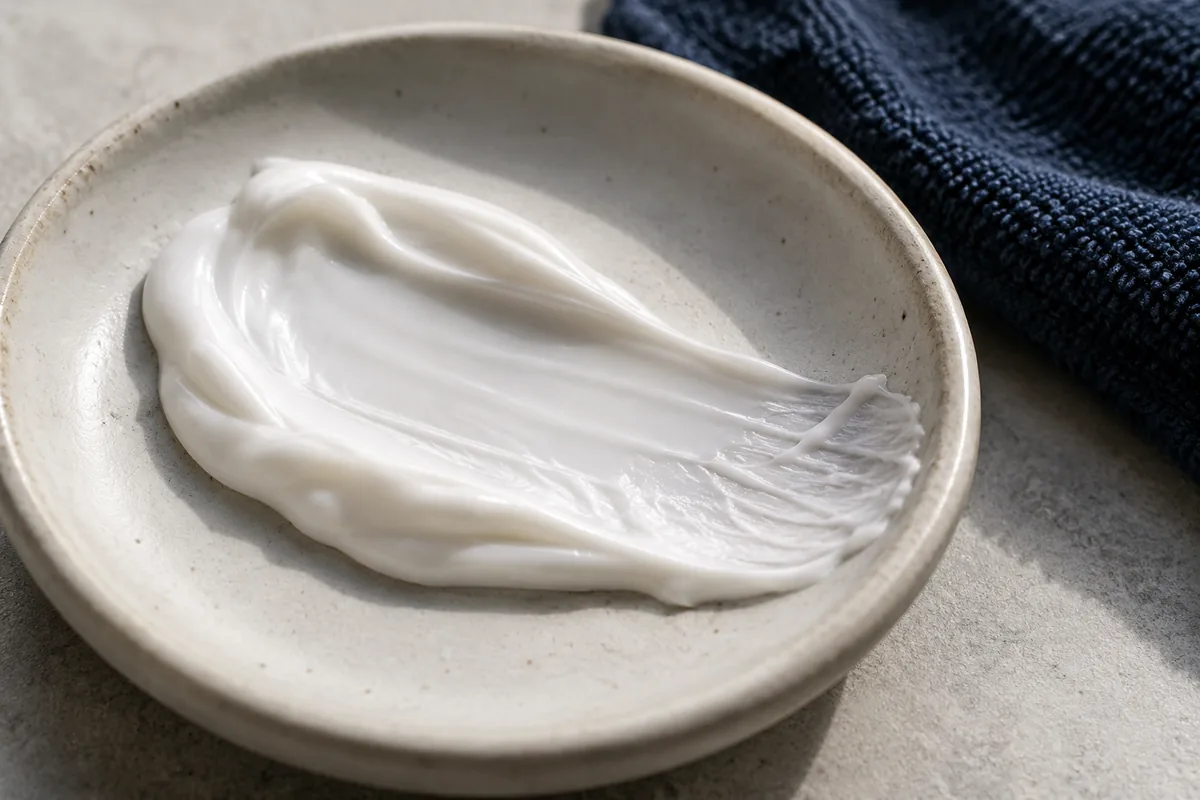
That's why "barrier repair" moisturizers lean on ceramides. In one study, adults with moderate eczema used a ceramide-rich cream and cleanser for 28 days, while another group used a dummy routine with none. The ceramide group's water loss and hydration got significantly better, while the dummy group stayed flat or got worse — a real, measurable gap — and people reported less dryness, plus less itch in the first two weeks (the itch difference had narrowed by day 28). [1] Worth being direct about that: this trial was funded by, and staffed with authors employed by, Ego Pharmaceuticals, maker of the cream and cleanser tested — real measured data, but one company's own findings on its own product, not yet independently repeated, so read it as suggestive rather than settled evidence for ceramide moisturizers generally.
One catch: ceramides aren't a magic bullet by themselves. The skin's "mortar" is a mix of ceramides, cholesterol, and fatty acids. Particular experimental mixtures and tested products can support barrier outcomes, but that does not establish a universal tri-lipid ratio or generic superiority for every product carrying those names.
What to do if your skin is stinging, flaking, or suddenly reacting to products that used to be fine — the answer is usually less, not more:
- Pause your actives (acids, retinoids, strong vitamin C).
- Switch to a plain, gentle cleanser.
- Use a barrier-supporting moisturizer — ceramides, plus humectants like glycerin or hyaluronic acid that pull water into the skin.
Most barriers bounce back in a few days to a couple of weeks. The most common way people make it worse is chasing the irritation with even more actives.
Honest caveat: this trial was in eczema-prone skin, where the barrier is already measurably weak. The same principles apply to a barrier you've temporarily over-exfoliated — even if your skin started out healthier.